
Podcast
Genetic Testing for Breeders: What It Can and Can’t Tell You, with Dr. Jessica Perry Hekman
Nov
Please find the glossary for this podcast transcript at the bottom of this page.
Jess Sedivy (00:00)
Welcome to the Functional breeding podcast. I’m Jess Sedivy Gunderson, filling in as interim host for Perry while she is on a break.
The FDC podcast is here to explore what goes into breeding dogs for functional health, both behavioral and physical. This podcast is brought to you by the Functional Dog Collaborative, an organization founded to support the ethical breeding of healthy, behaviorally sound dogs. The FDC provides educational, social, and technical resources to breeders of both purebred and mixed breed dogs.
You can find out more at functional breeding.org or in the functional breeding Facebook group, which we work very hard to keep friendly and inclusive. If you would like to support the podcast, you can find us on Patreon. There will be a link in the show notes.
Jess Sedivy (00:59)
Hi everyone, welcome back to the podcast. Today I am joined by our very own functional dog collaborative founder, president, and overall fearless leader, Dr. Jessica Perry Heckman. Perry is a geneticist and veterinarian whose work spans canine genomics, behavior, and the science of dog breeding. She earned her veterinary degree from Tufts University and her PhD in genetics, genomics, and bioinformatics from the University of Illinois.
She spent several years conducting research at the Broad Institute of MIT in Harvard, where her research included the genetics of canine behavior. She has co-authored numerous scientific publications, including research published in science.
Perry is currently a research scientist at Harvard University’s Hecht lab, a canine neuroscience laboratory, where she’s working to improve information collected through dog owner behavior surveys.
Today, we’re discussing the different technologies behind canine genetic testing, what they can and can’t tell us, and how breeders can use that information to make decisions.
We also dropped some really cool links in the show notes, including a genetics glossary, so be sure to check those out.
Jess Sedivy (02:14)
Perry, thank you so much for joining me today. And we wanted to cover some of the more basic questions that come up.
With genetic testing for dogs. And so these questions were sourced from followers of the Flatcoat Conservation Project. We did a post and we asked people what they wanted to know and what they wanted to learn. And we also shared that in the functional breeding Facebook group. to give a broader audience chance to to, let us know what they wanted to hear from you.
So there’s lots of different types of genetic testing that are commercially available to dog owners and breeders. And before we get into the differences between those tests, can you just talk about what some of the reasons people test their dog’s DNA are?
Perry Hekman (02:59)
mean, the big ones are if you’re a breeder, you are probably looking for specific sets of issues that are common in your breed or your mix. Um, and so you’re looking to see if those are in your specific dog either so that you can decide not to read that dog or maybe the dog is a carrier and then you can breed the dog, but you want to breed the dog to a dog who’s clear or something like that. And then people who have mutts often want to know what the breed makeup of the mutt is. And so those are the two really main reasons. There’s also keeping an eye sort of on population health. you can either do that. um Ironically, I say population, you can do it at an individual level.
by looking at the genetic diversity of your one dog. And that, while it only tells you about your dog and not about the population, it can also, it can help you know if your program’s going in the right direction. And it can, again, help you make reading decisions to say, you know, right now there’s not enough genetic diversity, so I need to start looking farther away from the pool of dogs that I had been using. And you can also, if many dogs in a population are tested, then you can also analyze that data in a way to say as a whole, what does the population look like? How are these dogs related to each other? Are they all very closely clumped together or is there some distance between them genetically? And I’m trying to think if I’ve missed anything and probably someone will come up with something, but those are the main things that I can think.
Jess Sedivy (04:38)
Yeah, in my mind, I kind of broadly divide the commercial genetic testing into um what you mentioned, where we’re looking at specific genetic variants or regions. And then this other set where we’re kind of looking at different variation all across the genome. So let’s start with a little bit more of that targeted testing where where someone is maybe looking for um to find out if their dog is a carrier of one specific type of test. Maybe just mention what some of those common tests are and and the companies that can provide those services.
Perry Hekman (05:13)
Yeah. And of course it really depends very much on what breeder mix you’re looking at. So, um, degenerative myelopathy is one at commonly known as DM, um, MDR one von Willebrands. These are, these are tests that have fairly strong, the, the DM test is a little bit more, um, it can definitely tell you whether your dog has the variant. should get into that. I think we’re getting into that next, right? About how some of them are completely clear about whether the dog has or does not have the disorder and others just tell you about risk. But some of the others that I listed there are very clear about whether the dog is going to have the disorder or not.
A lot of people are also interested in things like, um, what kind of coat color and coat variants does the dog carry? Um, so things like, um, actually it can, and that can even have health implications. If you’re looking for Merle for a long time, we thought that Merle was something that you could, you you could look and see if a dog had uh a Merle variant.
Just by looking because they would visibly be Merle, but we’ve since then discovered that there are some that don’t manifest visibly in the coat, but that if you breed the dog to another dog that has a Merle variant, that you can have what we call a double Merle, which has health implications. so people do tests for that. People do tests to see, you know, is the dog maybe heterozygous for long and short hair. And you know, that would help you know what kinds of coats you’re gonna see in the offspring or is the dog a carrier or, I shouldn’t say carrier because it manifests. So is the dog homozygous or heterozygous for furnishings would also be one that people might be curious about.
Jess Sedivy (07:09)
Yeah, and I just wanted to give everybody kind of a plug for an episode Perry did um with Micah from Gensol. And that’s a that’s one company that you can get some of these targeted tests from. You can also get some from the veterinary genetics lab at UC Davis. And I think paw print genetics is another common one. I I can’t remember if I’m forgetting any. I think that’s what most breeders use, and then for about a decade now, we have had high density genome-wide SNP testing. So the acronym is SNP. It’s fondly called SNP. And that is single nucleotide polymorphisms. And so these are the big companies. This is Embark and this is Wisdom Panel. So for our listeners, can you tell them a little bit about what SNPs are and what they can also tell us?
Perry Hekman (08:00)
Yeah, so SNP stands for Single Nucleotide Polymorphism, which is basically uh a lot of Greek as it happens for one letter difference is what it means. And so if you think of DNA as being a long string of letters, A, T, G, all mixed together, then a SNP just means that at one particular point, we expect one particular letter in most dogs or whatever species it is that you’re looking for.
So most dogs have perhaps an A at this particular point, but there are some dogs that have a different letter, perhaps a T. we know these are important because they are known areas of differences. There are lots and lots of places where things are different. In the genome, there’s no real easy way to take two dogs and sort of compare them to each other and see all of the differences.
But SNPs, we have a set of them that we are aware of in dogs and we have technologies that make it really, really easy to look for them. So it’s very easy for us to take a dog’s DNA sample and to assess what are all the one letter differences where this dog differs from what we think of as the generic dog as the most common versions of those letters in dogs overall, where are the places that this dog differs by one letter from that generic dog and it’s very easy for us to get a panel of that.
Jess Sedivy (09:33)
so one of the things that the SNP panels can do, the platforms is they are commonly used for breed composition. And can you talk a little bit about how those reference panels are determined and how breed composition is determined with these tests?
Perry Hekman (09:49)
Yeah, breed composition, otherwise known as ancestry testing.
So what you do, I actually worked at a lab that did this for a while. You go out and get genetic samples from all the breeds that you’re interested in. At this point, there’s a lot of that stuff out there in the data repository. So it’s not that hard to find anymore. Although at the time that I was doing this, we had some, a few of the rarer breeds.
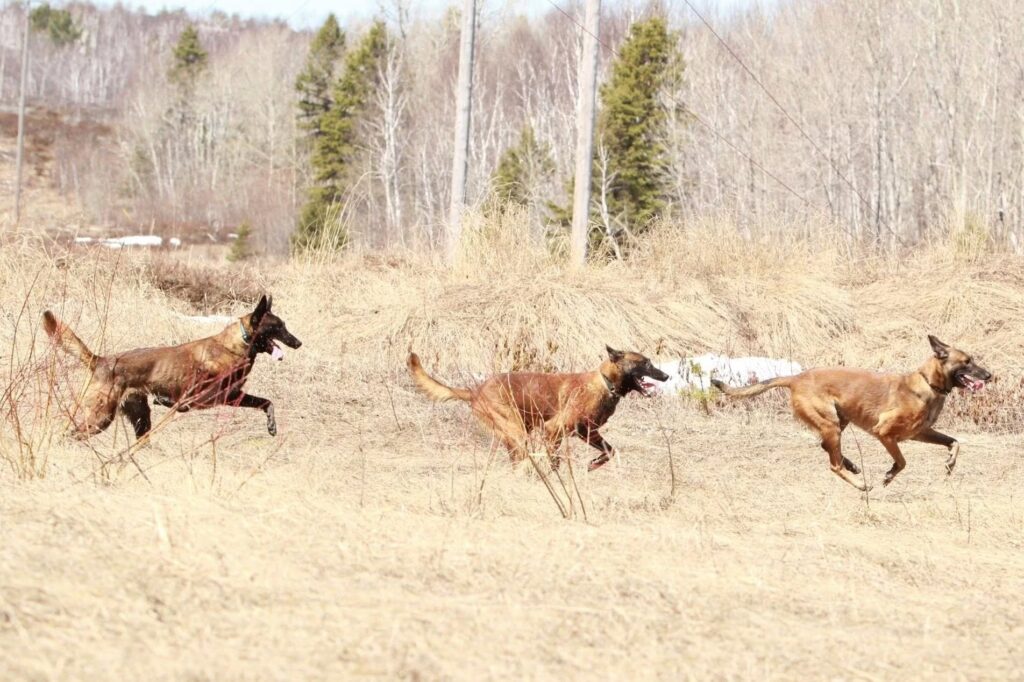
At that point, not even breeds that were super, super rare, for example, we didn’t have any good Malinois samples. So I had to actually go to a dog show one time with saliva swabs and I waited outside the ring while the Malinois were showing. And then I tracked the people down. I followed them with their dogs until they had the dog settled and then asked them if I could possibly take a quick DNA sample of their dogs that we would have Malinois samples. Cause I was pretty confident that dogs that won in the Malinois ring were actually Malinois.
So you get samples from all of the breeds that you’re interested in, and then you assess those however you’re going to. There’s a bunch of different ways that you could. What most places do, although not all, and we probably should get into this difference at some point, but what most places do is a snip panel. So as I said, there’s a bunch of snips that we know are interesting in dogs. And so for each breed, you have some number of dogs per breed.
And for each of those, you assess the dog at each of the snips in the panel. And from that, you can make basically a fingerprint to say, this breed tends to have this letter on this snip and that letter on that snip, as opposed to this other breed, which tends to have these different letters on these different snips. So once you have that database of information, then when somebody sends in a DNA sample for their mutt, you can take a look at what all of the snips are for the mutt and you can line them up against the different breeds. And you can say what looks like at this particular bit, this bit is a German Shepherd bit and this bit is a Golden Retriever bit and this bit is a Samoyed bit. And then you add all the bits up together to say this dog is 12 % German Shepherd and 8 % Golden Retriever and 56 % Samoyed or whatever it is.
So that is in essence how it’s done. I think a lot of people listening to this who think through that carefully will realize that one of the problems there is in how you get the initial samples. And so if, for example, with Malinois, I only got samples from show Malinois, then there would be perhaps some genetic differences from working Malinois. You don’t know that until you look, and you would assume that show and working Malinois would be pretty similar, but you might have some trouble if you only had samples from show and people then sent you in um dogs that were from working lines, you might start seeing some differences there. So obviously the initial samples are pretty important.
Jess Sedivy (12:55)
Well, and I think that that really gets to a question that is asked frequently, which is what happens if you test ancestry and breed composition with multiple companies, but it does they don’t match.
I think your answer will help people understand that that doesn’t necessarily mean there’s an accuracy issue between the companies. It’s primarily just that those reference panels might have been set differently.
Perry Hekman (13:20)
Yes, that is certainly one reason that you could see differences. So first of all, there’s the kind of data that they have. And then secondly, there’s how much data. A bunch of ways this could be. So you could have a dog with some Bernese Mountain dog in it and maybe the panel that the company that you’re using doesn’t have Bernese Mountain Dog, but the other company does, right? So that would be one. Then there could be, like we just discussed, the show versus working lines. I think that’s a little less of a common problem, but it certainly could be. Then there is the question of simply how many of the breed they have. So not all the companies publish how many dogs of each breed they have or what their minimum is.
So it’s possible they could only have three dogs of one breed and then they wouldn’t have very good coverage. So there’d be that. Or they could have decent coverage. They could have 10 or 20 dogs, but maybe the other company has 50 dogs. And so they just have much better coverage. So there’s that.
And then there’s how much coverage of the dog that they’re sampling. And to my mind, this is actually the biggest problem is that if I send in a sample to you and you only look at a few spots on the sample, so let’s say I send in a real MixiMix Mutt who’s made up of like 10 different breeds and they’re gonna be mixed up in little chunks. It’s not like here’s all of the golden retriever here, it’s more like here’s a bit of the golden retriever here and there’s a bit over there and a bit over there. And you have to collect all those bits and add them up together. So they can be very small slices of the breed in the Mutt. And so you have to really look pretty deeply at the MUT in order to get a uh wide coverage and be able to see all the data that’s there. So if you don’t take, if you don’t have a very large number of SNPs that you collect from the MUT in your panel, you can miss things pretty easily. And that is definitely a problem that has been seen out there in the wild.
Jess Sedivy (15:22)
Think that leads really well into something else that bears mentioning. Embark, which is a very common test platform that that uh people use for breed composition ancestry and also for some of the disorder testing that we touched on earlier in those targeted regions.
Um, embark recently decreased the number of SNPs available in their panel. They used to have roughly 220 to 230,000, and they have reduced that now to uh somewhere between 80 and 85,000. And I’m wondering if you can comment on that reduction in a commercial panel, how does that affect the accuracy or utility of the different things the test looks at?
Perry Hekman (16:09)
So ancestry testing would be where I’d be the most concerned for exactly the reason I just said.
And in order to really know how much it’s affected, you’d have to do comparisons before and after comparisons. And to the best of my knowledge, that hasn’t been published. I imagine Embark did do it internally, but I haven’t seen it published. So that would be a very interesting question to ask.
Typically the way we look at that is we say that a panel can identify a breed down to a certain percentage. So Darwin’s Ark, which has the deepest coverage of the dog that you’re sending in, is able, they have calculated that they can get down, I think, to 5%, you know, you see other places asserting that they can do 7 % or 12%. And this is also, it’s gonna be a little bit different for each dog. There’s always some chance-iness about if the test is actually gonna find this one particular bit or miss another particular bit.
But, that would be what I would be mostly concerned about. Now, Embark will not have dropped the SNPs that are important for finding exactly um the sites that are important for disorder testing, right? So that I would not be concerned about. So if you are, if they have a test that they’ve had for a while and it’s looking at, you we haven’t gotten into the difference between exactly how those tests work, but, they look at a specific spot and they say, you know, what does the dog look like at this spot? And we know that this spot has to do with this particular disorder. I’m not concerned about those tests changing. That’s not going to be a problem.
The other question is whether it’s still going to be as good as at looking at the dog’s whole SNP panel and making an assessment about the genetic diversity. And it certainly won’t be as good at that. Again, what does it mean in practice? How much worse is it? I would have to see before and after comparisons and they haven’t released those to the best of my knowledge.
Jess Sedivy (18:28)
They haven’t. Uh embark did tell me directly that they validated it against their previous um against the previous higher number of SNPs. Um, but that it was proprietary and they couldn’t elaborate on it. Um, which which isn’t really a big surprise. I do think I do I do inherently completely agree that I that I wasn’t worried about disorder testing. And I know for flat coat or retrievers specifically, uh they actually added a few. Um
Perry Hekman (18:59)
Nice.
Jess Sedivy (18:59)
So that was that ended up uh being okay. Um so putting SNPs behind us a little bit, um, let’s talk about STRs, short tandem repeats, how they’re different and what they’re what those tests are used for and what maybe what they can’t tell us also.
Perry Hekman (19:16)
Yeah, STR is also known as microsatellites and in the lab where I did my PhD, we always refer to them as microsatellites or microsats. And I know that’s not how the dog world refers to them. So I always try to remember to say STR, but I often slip up and say microsats because that’s how I think of them. So it’s just exactly the same thing. So where a SNP is a single letter difference, an STR, see I start to say microsats You can hear me doing it.
Jess Sedivy (19:41)
I know, it’s okay.
Perry Hekman (19:43)
So at one particular area, there are repeats. So like a common one is AT, AT, AT, AT, AT. So it’s AT repeated some number of times. And the number of times that it’s repeated is the piece of information of interest. The set of repetitions is called the STR, the microsatellite. So it’s an area, and it doesn’t have to be two, right? It can be, but it’s generally a fairly short number of letters, and then there are nucleotides, and they’re repeated.
So it’s, I’m trying to think how much detail to go into. It’s basically one of these things, unlike SNPs don’t change very often. ah Those are mutations that change fairly rarely sort of on an evolutionary scale. ah Whereas microsats, it’s easier when the DNA is being copied for that mistake to be made. And so they are much more recent changes. ah, decades, centuries, that kind of time scale. because the microsatellite contains more information than a SNP. A SNP is basically a binary piece of information. It’s either an A or a T. It’s either gonna be one or the other at that spot or an A or a C or whatever it’s gonna be, right? We always know that that spot, it’s either the letter that we expect or one particular letter that is the alternate version. um So it’s a small piece of information. the STR has a larger amount of information for one STR because it could be two or four or six or eight or 48 repeats.
So that’s a lot more information and it’s therefore if you just have a small number of them, it can be very useful for things like. uh, you know, it’s commonly used in population genetics and in things like trying to figure out if this sire is the correct sire, know, who your daddy is. in the history of genetics, before we had the ability to do these large SNP panels, STRs were the way to go because for, you know, you’d had to hand run them on these gels in the lab, but you’d run, so you’d get maybe 10 of them at once. Sorry, like 10 dogs sampled at once or one dog sampled in 10 places, and you would get a fair amount of information for that.
But as things have changed now, we are now able to get so much more information out of the SNP panels that even though a single SNP is much less information than a single STR, we nevertheless can get so many more SNPs out of a panel that that actually is the way that the industry has moved.
And so almost entirely that’s what the industry does. There are some cases where it still makes sense to do STRs. So AKC has a genetic test where you’re looking for parentage and STRs are just great for that. It’s very cheap. um You don’t need a whole lot of DNA, which also makes it less expensive and less challenging to do. And for just a few STRs, you can be very confident about whether this sire is actually the sire or not. So that in a nutshell is what they are.
Jess Sedivy (23:01)
So moving on to higher levels of genome sequencing, um, low pass whole genome sequencing, which is available through Darwin’s Arc. And now um we’re starting to see, uh, as you and I talked about a couple weeks ago, we’re starting to see direct consumer high pass genome sequencing, maybe even up to 30x. So can you talk a little bit about how that whole genome sequencing is different and from specifically probably from SNP testing. And what are the advantages, disadvantages? And I think probably a question most people would have is, is more genomic data actually more useful?
Perry Hekman (23:46)
Yeah, and there’s a not a yes or no answer to that, of course. So, whole genome sequencing is when, well, so with a SNP panel, as I said, you have these specific spots that you’re looking at where people have already ascertained that these spots are interesting spots for dogs and you can, you go look directly at those and you get exactly the answers to the questions that you’re asking.
Whole genome sequencing is looking across the whole genome, which means that you get a lot of answers to questions that you maybe weren’t asking. And so it’s really useful for researchers, people like me, who are trying to learn new things. So for example, if you have a breed of dog that has some disorder and we don’t know what causes what genetically is causing the disorder, and we need to find the location in the genome, where that disorder is happening and we just don’t even know where to start, you do whole genome sequencing to look at the whole thing. Now the genome is absolutely enormous. And so if you look very carefully at, I’m gonna just say as a simplification at every base, which is an oversimplification, but if you look very carefully at every base, every nucleotide, every letter in the genome, that would be extremely expensive. And time was, it was extremely expensive.
um The first whole genome sequencing of humans cost about a million dollars, but it has come way, way, way down and it continues to come down.
Jess Sedivy (25:19)
Yeah.
Perry Hekman (25:21)
So what we do to make it less expensive is we do what’s called um low pass versus deep sequencing. So deep sequencing is where to make sure that you haven’t made any mistakes, you look at every letter, every base multiple times. So if I said it’s 30 X that would mean on average, I looked at every letter 30 times because the way we do this, it’s pretty error prone. But if you do it 30 times over, you can pretty much tell what the right answer is. These days for a dog, it depends on where you go. ah But it’s probably going to be about $750 to get 30 X. That’s what it was the last time I checked for a dog.
I actually am trying to track down a health issue in myself and I just had myself sequenced for $400. Humans are cheaper because more of us get sequenced at once and it’s all about volume. So then the next way, so then the way that we make that less expensive is instead of looking at every base on average 30 times, we look at every base on average two times or one time or even half a time, right? guess on average you can say half a time, which means that you have a lot of errors and you have a lot of gaps because there’s some areas that are easier to look at than others. And so when you’re just skimming it, it’s also called skim seek, skim sequencing, then you miss the hard parts.
So now you have this less expensive, but very gappy and perhaps error riddled version. And what you do to make that better is you use what’s called an imputation panel. So that’s a panel of a lot of dogs, a panel that I worked with in the past had four or 500 dogs on it. Those dogs are all deep sequenced. And you use that panel to say, okay, given that I have this gappy set, what’s probably in the gaps and what are probably errors here? And there are reasons that that works really well, which I think is probably not worth my going into, but I certainly could if you wanted me to.
Jess Sedivy (27:38)
I just had just for a little bit of reference, I have two dogs sent out for 2x sequencing right now. Um, that I got for a hundred dollars each, and then
Perry Hekman (27:49)
Nice. Yeah.
Jess Sedivy (27:50)
um I did the last quote I got for a 30x, which 30x sequencing. You start to get into some storage issues. The files are large.
Perry Hekman (28:01)
Yeah.
Jess Sedivy (28:02)
Um, so like I think for flat coat conservation projects, since we’re still small, um, we probably have the resources and the storage to sequence our founding dogs without that being terrible. Um, the last estimate I got on that was about 600 per dog. So it has come down a lot, a lot, because I think
Perry Hekman (28:17)
Yep. And continues to, right? Yeah.
Jess Sedivy (28:21)
Yeah. Yeah. ‘Cause I think a couple I want to say two or three years ago to do a 30X would have been for a dog would have been about fifteen hundred. Um, so it’s
Perry Hekman (28:29)
Yeah, I think
Jess Sedivy (28:30)
creeping down.
Perry Hekman(28:31)
a little more than two or three years, but yeah, that’s what it was when I was doing my PhD, which is now 10 years.
Right, so I didn’t answer the second half of your question, which this gets into, which is, is it useful to do that? So the nice thing about the SNP panels is that we understand all of the questions that we’re asking, and they tend to come from companies that, know, commercial direct-to-consumer companies that package it up really nicely.
Because if I just handed you, you know, at this, you know, here’s a number telling you where in the genome it is, and here’s what the letter is, you wouldn’t know what that meant. So you need someone to package that up for you saying, this location is asking the question about whether the dog has vanguilla brands, and here are, you know, here’s the letter for the one chromosome, and here’s the letter for the other chromosome, and that means that the dog is a carrier, or let’s be happy, that means the dog’s clear.
So, the low pass sequencing or the whole genome sequencing would need to be packaged up like that. And there aren’t a lot of places doing it. The other problem is that with low pass, as I said, it can be gappy. So you can miss bits that you’re really interested in. Like maybe you are really interested in von Willebrands. You really want that test. And for whatever reason, it just skipped that test or it didn’t get it deep enough to give you a really confident answer for that test.
So, um Darwin’s Arc is working on solving that problem with a what’s called a targeted panel where basically they do the low pass, but they also specifically tell it here are particular areas, go a little deeper on those areas, because those are areas that we’re interested in. So then they will get all the actual information, all the data that’s needed to answer those questions. And then I presume they’re also going to be giving a package. This is a new product for them. It’s not quite out yet, but um they’ll be giving a package, I presume, which will answer your questions about, you know, what is it at this point and what is it at that point and what does that mean for me? But so if you just went and did it yourself, you’d have to answer all those questions yourself, which most of us are not able to do, although with AI, it’s getting easier and easier.
Then as you said, Jess, there’s the storage issues. So if you wanted something like 30X, that’s probably gonna be around 500 megabytes per dog. So that adds up very quickly if you have any number of dogs, plus again, it may not even be packaged in such a way that has the information that you want. So for most people, that’s not useful, but for some projects it is very useful.
Jess Sedivy (31:05)
uh one question that we got from listeners and followers was um commercial disease panels include variants identified in breeds other than the dog necessarily being tested. So how should folks interpret those results?
I hear this too from purebred breeders where they say, well, I didn’t want to run an embark panel because it tests for 200 plus disorders that my breed doesn’t have. Um, how can folks interpret those type of results, especially for the people that are breeding mixed breed dogs um
Perry Hekman (31:37)
Yeah.
Jess Sedivy (31:37)
or breeds that have relatively few validated disease tests?
Perry Hekman (31:41)
Yeah, it’s tough, right? So, well, so let me first address the, “don’t want to do it because it tests for too many things.” So the reason is that that’s how the panel works, that there’s no way for them to just do the subset and it wouldn’t cost any less if they did. So they just run the panel on everything and then it’s up to you to decide what’s relevant and what’s not relevant. um and then the question of what’s actually relevant. I mean, I know that Embark does their best to say this was tested for this breed. And there’s a lot of, there’s a lot of cases where they’ll say like, this is the golden retriever version. ah You know, this is the German shepherd version, but you know, if your dog comes up positive for something that for a disorder and the panel is unclear, about whether it’s been tested in your breed or not, then that is something to look into. And so we can talk about the best ways of doing that in a minute. But basically a lot of these disorders have been found in specific breeds. And what tends to happen is when they’re found in a particular breed, then the researcher who’s interested in it will often start looking in other breeds to see if that same SNP also indicates that the disorder is present in the other breeds.
In some cases when it’s been found in a whole lot of breeds, it sort of always is the case that it does indicate the presence of the disorder, then we can just assume that yeah, this is something very old and it certainly does affect all breeds and you can just, you know, sort of, even though maybe it hasn’t been tested in every single breed, you can move forward with assuming that it is problematic if you have it in your dog. But then there’s the ones that um the big one is right now is the copper toxicity variant, which was there’s two or three variants which have been found fairly recently in Labradors and maybe one other breed. We have a podcast episode on this and I asked her in the podcast episode, we were interviewing the researcher who’d found them and she basically said, we have absolutely no idea if these variants are indicative of the disorder if they’re found in other breeds.
So in that case, what do you do? It very much depends on what the disorder is. So we can talk about that as well. But first let’s talk about what you do if it’s in a mixed breed dog, because this is exactly something that I’m dealing with in my own um not yet born breeding program. I have Ollie who is in very large part Labrador and she’s three eighths Labrador. And I was considering breeding her to a boy dog. I say this, this is all way in the future. She’s too young to breed. He’s too young to breed. I’m just thinking way, way ahead. So before anyone thinks that I’m breeding a baby, I’m not. uh But we all like to sort of look around and think ahead and think what it might be.
And so I had my eye on this one boy, but he had the bad copper toxicity variant um and Ollie is 3/8ths lab. And so I haven’t done a genetic panel on her yet. But if she has the set of variants, this one is complicated how they interact, but I will just treat her as a purebred lab for that purpose because she has enough lab in her that I don’t feel like it’s worth risking it. Where do you draw that line? I don’t know, right? There’s no way to say exactly. It’s as the dog has less and less of the ancestry of the particular breed that you’re concerned about, the risk is less and less. Cause you just don’t know if they have the particular areas of the genome that are problematic. I’ll get a little bit nerdy here, which to explain why we think of it that way. um So, you know, if I test Ollie and she turns out to be absolutely perfect, absolutely what we want on the copper toxicity area, um could we not then say, oh, well, she’s just not Labrador where it matters. So because she’s clear on the copper toxicity, so surely we can breed her to somebody who has the bad copper toxicity genes and it’ll be fine. And the answer is no, because we don’t know what else it’s interacting with in the rest of the genome that there’s, there’s other stuff that we haven’t tested for. We don’t know where it is. It’s hidden in the dark matter, right?
But there’s something out there that means that this particular variant interacts with something else in Labrador, which is why Labradors tend to be susceptible to it and other breeds less so. And we don’t know if she has that because we don’t know what it is or where it is. We just know there’s something in Labrador. And so again, the amount of Labrador that she has tells me how much risk there is that she has that. And I don’t know where to draw that line. That’s something that everyone has to decide for themselves.
Jess Sedivy (36:41)
It is it’s tough. Breeders have to weigh so many things. And they have to you also have to weigh health conditions that can be mitigated. Um, and that that you know, there are some of them that can be mitigated, and and that gets to be part of the decision and part of the conversation too. And I think sometimes that that that’s a struggle for homes or buyers. Um, but but it very much
Becomes part of the thought process. And I I think you walked us up to my next question perfectly. because there are a lot of complex diseases and complex issues. And so what are some of the limitations that we have with genetic testing for for things like hip dysplasia or epilepsy, cancer, even I even I would say heart disease? Yes. Mm-hmm. Yeah.
Perry Hekman (37:24)
or even degenerative myelopathy, which is not a 100 % test. Yeah, good, I wanted to make sure we talked about this because this is something that people don’t always understand very well. well, so here, for example, Doberman Pinchers have a serious problem with DCM heart disease, and there are two, three tests for it now, and I’ve had people say, this is a terrible test. My dog tested positive and didn’t get it, or my dog tested negative and did get it. And so you sort of have to understand the difference between the different kinds of tests and the different kinds of disorders.
So there are some disorders that are controlled by one gene. if you, um obviously everybody has two copies of the gene, one for each of the pair of chromosomes. But if you have um the bad, the risk allele for both, chromosomes for that gene, then you’re pretty much going to have the disease. And von Willebrand’s is always my go-to for that, or MDR1 is the other one. And I know you have a follow-up question on that, so I’ll leave that for the follow-up.
Jess Sedivy (38:35)
Mm-hmm. Yeah.
Perry Hekman (38:37)
But those are, we call those Mendelian, or simple traits, and they’re great because you do the test and it tells you, it’s like black and white. It’s like, okay,
Jess Sedivy (38:45)
Mm-hmm.
Perry Hekman (38:46)
the dog’s clear, or it’s a carrier, you can breed it to someone who’s clear, or it’s affected and you need to go see your vet, right? You know what the deal is.
But there’s a lot of disorders that are not like that and DCM and degenerative myelopathy and all the cancers, hip dysplasia, all the autoimmune diseases, those are all in that category. And it’s basically that there’s a whole bunch of genes that affect your risk for them. Plus, we say your environment, which makes people feel like, if I just did everything right, the dog would not get cancer. But it’s not, that’s just really sort of what we mean.
What we say when what we mean is like there’s this other these other factors that are not genetic, but it doesn’t mean they’re under your control necessarily. It could mean that a stray bit of sunlight hit the dog’s skin wrong and they developed melanoma, right? Like it’s not necessarily
Jess Sedivy (39:35)
Mm-hmm.
Perry Hekman (39:36)
Things you can control. um So those are called complex disorders and complex phenotypes are very much what I’m interested in. That’s what I did my PhD in. uh Behavior is a complex phenotype, which is controlled to some extent by genetics, right? because we can selectively breed for behavior, but also very much by environment. And so there are tests out there for some of these disorders, for many of these disorders, which are just tests of risk, which just tell you this dog is at higher risk. It doesn’t mean it’ll get it. And it doesn’t mean that the dog that is clear for the test won’t get it. It just means that the dogs that have the test are at higher risk. And so,
These kinds of tests are really much more useful, I think, for breeders than
Jess Sedivy (40:22)
Mm-hmm. Yes.
Perry Hekman (40:23)
for owners. As you hear horror stories about owners who test the dog, see that it’s tests positive genetically for degenerative myelopathy and have the dog euthanized when it may not ever, it may not have had it, it may never have been going to get it, right? uh But for a breeder, you could say, okay, this is not a dog that I want to breed. Again, of course it comes down to the question of balancing everything in breeding and having enough genetic diversity is a very important part of managing these problems. So, you you could imagine a breed that had a particular form of cancer that you might, you know, there might be a test that says here is a risk allele for this particular cancer. And you could imagine breeders then saying, okay, we’re not going to breed any dogs that test positive for that allele which could actually be the worst thing to do because they would
Jess Sedivy (41:20)
Yes.
Perry Hekman (41:21)
then decrease their genetic diversity so much, it be a bottleneck that would actually make things worse. It could even make things worse for that exact disorder or it could make things worse for another disorder. So there’s always so much to balance, but all else equal for a breeder, you see a test like this, it could be useful to know, you you put it into, again, your buckets of pros and cons for breeding that particular dog.
Jess Sedivy (41:44)
Well, and I think this transitions really well too, away from disorder testing into genetic diversity, and they are undeniably related. Um, but how can breeders use genomic information to slow the loss of genetic diversity in a closed population? There are definitely limitations, but we do have these metrics. We have genetic COI. We have another popular one at the moment is DLA haplotype diversity.
And how can we use those types of metrics to select breeding pairs?
Perry Hekman (42:16)
Yeah, so you can use them to genetically test ahead of time to see if two dogs are fairly related to begin with, and if they are, then they wouldn’t be good candidates to be bred to each other. The idea being that, you know, within a breed, they’re all somewhat more related than to dogs of other breeds. But within that, there certainly are lines and subpopulations. And in order to slow
the loss of genetic diversity, you’re wanting to breed within the breed sort of as far apart of your subpopulation as you can. And you don’t necessarily know what that subpopulation is. Sometimes you do, sometimes you’re like, here are my lines and, you know, and I can, know that I can go breed to, you know, dogs that I’ve never bred to before. But sometimes you don’t really know who’s more or less related to your dog. And so you can do some of these tests in order to say, so with the DLA haplotypes, you would use those to say, is this dog more or less related to this other dog? um I don’t think that’s necessarily the best approach when you could directly do a COI comparison where you can say, you can’t, COI is something that the puppies would have that you’d be concerned about, but you could contact a company like Embark and say, given the mom’s tested and the dad’s tested, can you predict what the ranges of COIs would be in the puppies? And the reason I prefer that to DLA is that DLA looks at one spot, which is certainly useful, but COI looks across the whole genome, which is more useful. Again, just having more data in general helps you make better decisions, ah particularly about genetic diversity.
Jess Sedivy (43:56)
Well, and one theme that that is really coming through is that it it is risk. It is how you balance risk, how you gather information, how you use that information. When we’re talking about genetic COI, genetic coefficient of inbreeding, can breeders wager that reducing genetic COI can reduce complex disorders that don’t have genetic tests?
Perry Hekman (44:20)
Right, I mean, that’s what we very much believe from all the evidence that we have looking in wild populations and in other managed populations that we’ve seen again and again that the less genetic diversity, the higher the risk of having genetically mediated disorders. And it’s not always, it’s risk.
So, you know, every so often you will have a population that has very minimal diversity and is still pretty healthy. That does, you do thread the needle sometimes like that, but it’s pretty rare. If you’re looking at what’s the most likely, it’s the most likely that as your genetic diversity starts going down, your risk of disorder starts going up. And there are papers out there showing things like as genetic diversity goes down, veterinary bills go up and things like that, and just different ways of looking at how to assess that risk.
Jess Sedivy (45:17)
we had a few follower questions that were really interesting and they didn’t quite fit in a different location. Yes.
Perry Hekman (45:23)
Yeah, you showed me those and they’re great. We should definitely talk about them. I want to warn people that I’m not going to have great answers for them because they are.
Jess Sedivy (45:30)
That’s okay. That’s okay. And honestly, I I’ve always thought that is one of the most important things about researchers and science and these the process of learning is that it’s okay to say there’s things we don’t know and there aren’t always definitive answers. one of the questions we got was are there any companies testing and comparing haplotypes between subpopulations of a
Perry Hekman (45:55)
Mm.
Jess Sedivy (45:55)
closed stud book breed?
Um, I do think
Perry Hekman (45:57)
rights.
Jess Sedivy (45:58)
This was done. I think this was mocked up a little bit with the Doberman Diversity Project, but I don’t think I think that was done independently. Um, and the, you know, the kind of the question centered around say modern confirmation pointers versus American field trial pointers. Some
Perry Hekman (46:14)
Mmm.
Jess Sedivy (46:15)
of these breeds where there are clear splits between golden retrievers are a great example. They’re a wonderful, lovable, common dog. They definitely have field lines.
Obedience lines, show lines, I would wager. So is there anybody looking at the differences of the subpopulations?
Perry Hekman (46:33)
No, not that I know of. Actually, Jess, you might almost know because I know you’ve done so much
Jess Sedivy (46:36)
Yeah.
Perry Hekman (46:37)
digging into what the different companies do. um I don’t know of anyone looking at it. And I think part of that is the challenge in collecting because we don’t so much these days go out into the field as you would say to collect dogs. We more have owners send in samples or we, you know, there’s so much information, so much data out there in data repositories at this point that often when you want to ask a question about golden retrievers in general, you can go like there’s hundreds of them out there already sequenced for you for free.
Jess Sedivy (47:09)
Mm-hmm.
Perry Hekman (47:10)
But when we don’t tend to trust that the owners who send in their dogs know whether they’re field lines or show lines, I think a lot of owners certainly do know that, but a lot of them don’t even know what that means. So, and it’s really hard to differentiate what kind of owner you’re talking to.
um And so that’s the hesitation that I know a lot of researchers have is they don’t know a good way to phenotype the difference between the two to confidently say I have a show line here or I have a working line there. um I mean, and as I’m talking about this, I’m thinking of all the ways that, know, well, you could certainly just go physically go to, you know, to field trials and collect dogs from there. And you absolutely could do that. But to the best of my knowledge, people haven’t.
I hope that’s something people will do in the future. I think it’s really valuable, but I haven’t seen anyone actually doing it.
Jess Sedivy (48:07)
Yeah, sampling strategy is such a huge, is such a huge issue, especially since a lot of these tests are paid for by owners or the bulk of them. Uh the bulk of the testing cost is paid by owners and it’s voluntary. And I I think there’s also really uh gaps if you have dogs that are are anonymous. Um, you can’t tie them to pedigree
Perry Hekman (48:29)
Yeah.
Jess Sedivy (48:31)
data, you can’t tie them to outcome data. Uh I’m uh spoiled. I come from a smaller breed that has an absolutely outstanding pedigree database. but linking genomics to those pedigrees or making sure that all different lines have been sampled and and that the breed is accurately characterized is near impossible. Um it’s really difficult.
Perry Hekman (48:56)
Yeah,
it’s, I think it’s frustrating particularly to listeners of this podcast because most of the people who listen to this podcast do know whether their dog is from show or working lines or
Jess Sedivy (49:05)
Mm-hmm. Yeah.
Perry Hekman (49:06)
it, but it’s easy to forget that 99 % of dog owners don’t know that or even have an idea of what that means. And I think there’s a, there’s a great need for better databases out there collecting, collecting owner data in a more intelligent way, because I think there’s ways of asking the questions to get the data if it’s available. And I think a lot of the times researchers have put together surveys and databases without really understanding the community or how to ask the community. Like I worked for a group that asked the community, is your dog a registered purebred? And then asked list, you know, if, if no list the first main breed and then less the second main breed and then assumed that if someone listed only Labrador is the first main breed that therefore the dog was a purebred. And I was like, that’s you didn’t ever, you said, is the dog a ready? Like you didn’t ask the
Jess Sedivy (50:13)
Right.
Perry Hekman (50:13)
right questions. Do you know how many lab mixes people adopt from shelters, which probably have actually no lab in them at all.
Jess Sedivy (50:22)
Right. Mm-hmm.
Perry Hekman (50:22)
But people just
like when you, you know, this is a lab mix, they’re going to say, it’s a lab and I don’t know what else. And so I’ll put lab, you know, so they just ask exactly the wrong question. And it really diluted the data. You have to know the community. And I think a lot of researchers don’t recognize that.
Jess Sedivy (50:37)
Another question we got was about the DLA2 haplotypes and mitochondrial DNA haplotypes. And can they tell us or can they help us understand these genetic differences between subpopulations within breeds?
Perry Hekman (50:53)
Yeah, I mean, think those are definitely decent ways of classifying subpopulations. STRs would be another good one, right? Another inexpensive one.
Jess Sedivy (51:01)
Mm-hmm. Yep.
Perry Hekman (51:03)
I would say be careful with the mitochondrial because it’s only from the mother’s side. And there have been a lot of cases, I don’t know of cases with dogs, but there have been cases with other species where…
Researchers have looked only at the mitochondrial DNA because it was easy or less expensive or that’s just what they were looking at. And then when they turned around and looked at stuff that also included the father’s DNA, all of a sudden they found stuff to be quite different than they had expected. So if you have a population where, for example, maybe frozen semen is used really frequently from one group um and you’re only looking at mitochondrial DNA, you’re not going to get.
to see that there’s this massive use of this particular group of boys, which as I think about it with popular sire issues, that actually might be quite
Jess Sedivy (51:54)
Mm-hmm. Yes. Popular sire syndrome, yeah. Mm-hmm.
Perry Hekman (51:57)
a big problem. So I would be very cautious.
Jess Sedivy (52:01)
I think that’s fair. I think that’s actually a really great way to answer it. Um, before uh before we wrap up, let’s go back to that. let’s go back to MDR1 as an example. This was a non-negotiable for me when I was looking for my new founder. And and I think getting into it will will kind of explain why. But sometimes a dog will test as a carrier for a recessive genetic disease. And we can’t always assume that the dog won’t develop the disease at all. Um
So talk a little bit about the circumstances where carriers can exhibit symptoms, uh incomplete penetrance, things like that, and and and how severely it’s expressed.
Perry Hekman (52:40)
Yeah, so basically we don’t we don’t 100 % understand how the various genes work in the real world. And so in the case of MDR1, we can do sort of population wide tests where we see that for the most part, if dogs are clear, they never develop the disorder. And if they’re carriers, they really mostly don’t. But then, you know, if they’re a homozygous affected, they do. But maybe sometimes we miss and so with MDL1, right, there’s these, there’s sort of coming to be an awareness that there are sometimes carriers that do develop it we don’t quite know why. ah
And that’s just because there probably are interactions with some other genes that ah we’re not aware of because doing all of those tests for all of those interactions is not possible. The way you’d have to figure it out is you’d have to find a large number of carriers that, that both did and didn’t have uh manifest the disorder. And then you would test to see what’s the difference between the two of them. But you’d have to have a large set of them and you’d have to be very confident about the phenotypes for each. so, you know, doing those tests is quite challenging and quite expensive.
So there’s just a lot we don’t know about genetics, right? And genes interact with genes a lot massively. when you, those of us who learned about Mendel and Mendel’s studies with the peas, as our first introduction to genetics,
Jess Sedivy (54:07)
The peas.
Perry Hekman (54:10)
we tend to think that mostly genetics is about one gene that controls one trait. And that’s just very unusual. Mendel had to actually hunt a while to find some examples of that in order to do his famous studies. For the most part, that’s not how it works. And even so then, even when we find some ways where we think that is how it works, it’s not too surprising that from time to time you do find exceptions.
And Von Willebrand’s is another one. I sort of had learned that initially as carriers are not affected, but apparently carriers sometimes are. Sometimes less so, right? Which is what you termed as incomplete penetrance. Sometimes a carrier is somewhat affected, but not as much as homozygous affected. But, you know, it’s just hard to know what it’s actually gonna mean in the real world. Yeah, yeah.
Jess Sedivy (54:59)
It’s hard to know where that spectrum falls. Yeah. Um, so as you just to wrap up, as you’re thinking about maybe starting your own breeding program or thinking about you know, all the breeders that you talk to and consult with, what advice would you give breeders about genetic testing when planning litters?
Perry Hekman (55:16)
hard to know exactly what the right thing is. So maybe at a high level, I would say just like anything else in breeding, find a mentor who you trust, someone who’s breeding dogs that are similar to what you wanna produce and ask them.
about what they do. And so it may be that you have multiple kinds of mentors, right? It might be that you have a mentor who helps you figure out how to get the right behavioral profile that you’re looking for and one who helps you understand how to whelp puppies and one who helps you understand how to raise and socialize puppies and one who helps you understand a bunch of genetic testing, right? Because those may be different people with different skill sets. But, um you know, I do think it’s important, but I think there’s no…
There’s no set rule book, unfortunately, for exactly what you should do or for how to make these decisions. And just the best way to do it is to find a supportive community and find out what other people do and start trying to become a nerd about it and learn as much as you can. you know, that’s, it’s a big ask, but that’s often what breeding is about is just learning a lot about all these decisions. And the FDC has tried really hard to make that type of community available to people. these kinds of questions are exactly what our Facebook group is for, right? To go and say, have this situation and sort of what should I do? And, you know, as I say that I’m sort of wincing, because you’re going to get some bad answers as well as some good answers when you go to Facebook.
Jess Sedivy (56:41)
It’s true, but
Perry Hekman (56:43)
So you also, definitely have to sort of assess who’s saying what, but you you go, you collect the answers, you start finding people who you trust more and more and, you know, or you get an answer and you start, you know, okay.
Well, let’s assume this is going to be my answer. Let me start digging into what that means and whether other people have followed this approach and had problems. And it’s just a lot of work to figure it all out, unfortunately.
Jess Sedivy (57:07)
Thank you so much for joining me today, Perry. I never dreamed when I met you the huge role you would play in the Flatcoat Conservation Project and just
Perry Hekman (57:17)
Aww.
Jess Sedivy (57:17)
how wonderful it was gonna be to get to know you. And I never dreamed I would be on this side of the microphone interviewing you. So I got out of bed this morning and thought, I don’t think anybody saw this coming, but but I really appreciate that. And and for our listeners,
We’ll put some things in the show notes. We will share this uh in functional breeding. uh please ask questions. Don’t be afraid to ask a question, even if you think it’s too basic or it’s too silly or it’s too complicated. That’s how we learn from each other and and that’s how we support each other along these breeding journeys. So thank you very much, Perry. I appreciate it.
Perry Hekman (57:53)
Thank you for doing such a good job of running this podcast.
To learn more about the functional dog collaborative, visit functional breeding.org. This podcast is brought to you by the Functional Dog Collaborative. This episode was produced and edited by Charmaine Swan with production support from me, Jess Sedivy Gunderson. If you’d like to support the show and FDC itself, you can find us on Patreon. Check the link in the show notes. Enjoy your dogs.
Links Referenced in this Episode
National Human Genome Research Institute – Talking Glossary of Genomic and Genetic Terms:
https://www.genome.gov/genetics-glossary
Hecht Lab and The Canine Brains Project:
Darwin’s Ark:
Flatcoat Conservation Project:
https://www.flatcoatconservation.org
Glossary
DNA basics
- Genome: The full set of a dog’s DNA.
- Nucleotide (base): One “letter” of DNA: A, T, G, or C.
- Variant: A spot where a dog’s DNA differs from the usual sequence.
- Allele: One version of a gene. A dog gets one allele from each parent.
- Risk allele: A version of a gene that raises the chance of a disorder without guaranteeing it.
- Chromosome: A long strand of DNA. Dogs have pairs, one from each parent.
Inheritance
- Homozygous: Having two identical copies of an allele.
- Heterozygous: Having two different copies of an allele.
- Carrier: A dog with one copy of a recessive disease variant. It usually doesn’t show the disease but can pass the variant on.
- Clear: A dog with no copies of the variant being tested.
- Affected: A dog with the copies needed to have the disorder (for a recessive disorder, two).
- Mendelian (simple) trait: A trait controlled by a single gene, so test results are clear-cut.
- Complex trait or disorder: A trait shaped by many genes plus non-genetic factors, such as hip dysplasia, cancer, DCM, and behavior.
- Phenotype: What you can actually observe in the dog: its traits, health, or behavior.
- Incomplete penetrance: When a dog with a disease variant doesn’t show the disorder, or shows it only mildly.
Types of tests
- Targeted test: A test that checks one specific known variant, such as MDR1 or DM.
- SNP (single nucleotide polymorphism): A one-letter difference at a known spot in the genome.
- SNP panel: A test that reads thousands of SNPs at once. Embark and Wisdom Panel use these.
- STR (short tandem repeat) or microsatellite: A short DNA sequence repeated a varying number of times. Used for parentage testing.
- Whole genome sequencing (WGS): Reading across the entire genome instead of selected spots.
- Coverage (depth), as in 30x: How many times, on average, each letter of the genome was read.
- Low-pass (skim) sequencing: Cheaper sequencing at low coverage that leaves gaps.
- Imputation panel: A set of deeply sequenced dogs used to fill in the gaps in low-pass results.
- Targeted panel: Low-pass sequencing that goes deeper on specific regions of interest.
Ancestry and populations
- Breed composition (ancestry testing): An estimate of the breed makeup of a dog, usually a mixed breed.
- Reference panel: The set of known-breed dogs that ancestry results are compared against.
- Genetic diversity: How much genetic variation exists in a dog or a population.
- Closed population (closed stud book): A breed whose registry admits no outside dogs.
- Subpopulation: A distinct group within a breed, such as show lines or field lines.
- Bottleneck: A sharp loss of genetic diversity when only a few dogs are used for breeding.
- Popular sire syndrome: Overuse of a few males, which narrows the gene pool.
Breeding metrics
- COI (coefficient of inbreeding): How inbred a dog is. Genetic COI is measured from DNA rather than calculated from the pedigree.
- Haplotype: A set of variants that tend to be inherited together.
- DLA (dog leukocyte antigen) haplotypes: Immune-system genes sometimes used to compare how closely related two dogs are.
- Mitochondrial DNA: DNA passed down only from the mother.