
Podcast
Breeder Spotlight: Tara Doherty and the Figment Vulpine Spitz Project
Aug
Jess Sedivy (00:00)
Welcome to the Functional breeding podcast. I’m Jess Sedivy Gunderson, filling in as interim host for Perry while she is on a break.
The FDC podcast is here to explore what goes into breeding dogs for functional health, both behavioral and physical. This podcast is brought to you by the Functional Dog Collaborative, an organization founded to support the ethical breeding of healthy, behaviorally sound dogs. The FDC provides educational, social, and technical resources to breeders of both purebred and mixed breed dogs.
You can find out more at functional breeding.org or in the functional breeding Facebook group, which we work very hard to keep friendly and inclusive. If you would like to support the podcast, you can find us on Patreon. There will be a link in the show notes.
In this Breeder Spotlight, I had the chance to sit down with Tara Doherty to talk about her Vulpine Spitz project This ended up being a thoughtful, layered conversation about what it really means to breed for purpose.
We talked about Tara’s vision of creating a companion dog that blends that classic spitz personality and zest for life with something many homes are really craving: biddability, emotional stability, and the ability to truly settle. Not just a dog that can do things—but a dog that can live well alongside people.
What stood out to me in our conversation was how intentionally this project is being built. Tara walked me through the early foundation crosses and how future breed additions will be guided not by aesthetics, but by temperament and function.
We also spent time digging into her background, which really informs this work. From years as a dog trainer to raising and whelping litters for service dog programs, Tara brings a depth of experience in evaluating temperament, raising puppies, and thinking long-term about outcomes. And hearing about her own service dog, Cadence—who had a full career as a breeding dog before becoming her working partner—really grounded the conversation in what these dogs can be when everything comes together.
We got into the realities of starting something like this from the ground up: making decisions without a fixed roadmap, balancing consistency with genetic diversity, and staying anchored in clear goals even as the dogs themselves continue to teach you.
And I think what I appreciated most is that this wasn’t a conversation about having all the answers—it was about asking better questions. About observation, iteration, and being honest about trade-offs.
So with that, let’s get into the episode.
Jess Sedivy (02:56)
Tara, you are part of the Vulpine Spitz project. And for our listeners who are not familiar with this project, could you maybe tell us a little bit about its origins and its goals and the dogs themselves?
Tara Doherty (03:10)
Yes,
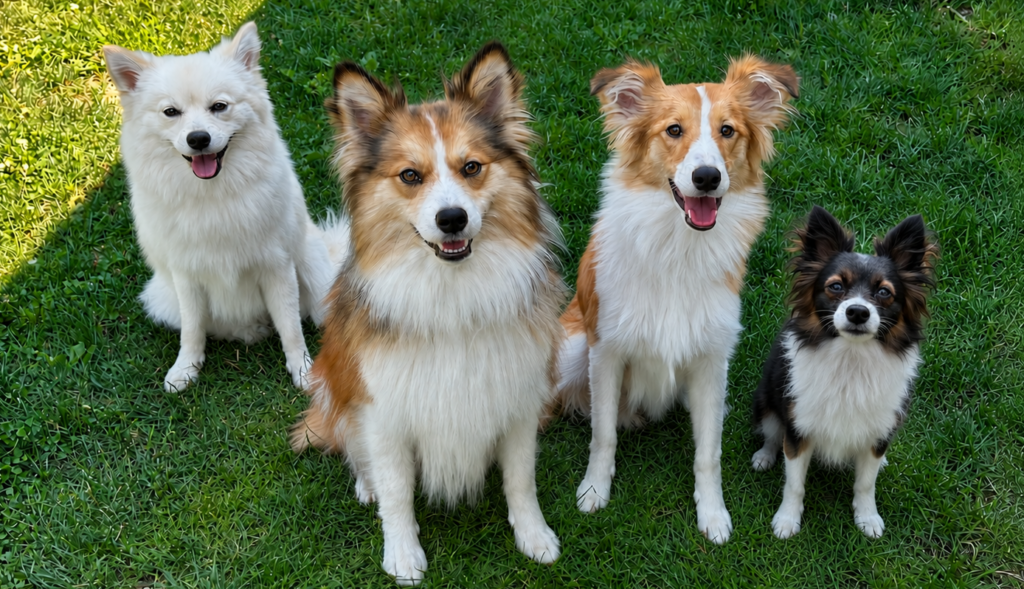
absolutely. So the Vulpine Spitz project, and vulpine I often have to explain means fox-like, was founded by Cyril Cherniak, originally out of Georgia, which is where I went to get my first puppy Finch. And the goals of the project were really to make just an easy pet dog, but one that had lots of
personality and kind of that spitzy kind of silliness that they’re known for but moderate in size temperament coats all the things that you know kind of the modern pet home is looking for and and I feel like we’ve been moderately successful in that and and surprised all of us a little bit by how quick and easy it was to get
to the look that we were looking for and now the really hard work of getting to that temperament as well.
Jess Sedivy (04:11)
Yeah, we were chatting before the recording started just that your dogs are so cute. They’re just, their little faces are just, adorable. And I can only imagine that they have an adorable personality to go with it. How would you describe, and this can be your overall breeding philosophy, and it can also kind of touch on your breeding community too, but how would you describe how you approach breeding and what your overall philosophy is?
Tara Doherty (04:38)
One of my mentors, Jackie Clark, used to say, don’t let perfection be the enemy of good. And that really centers everything I do. I think with my experience in the service dog world, you know, I had the opportunity to see hundreds, if not thousands, thousands of dogs.
and realize that none of them are perfect. There’s no such thing as a perfect dog, but that breeding really comes down to really kind of focusing your priorities and staying kind of set on that. And then just pairing dogs really thoughtfully and improving each generation over the last. And that’s the win is when you successfully make a generation that is nicer than the previous generation. So, yeah.
Jess Sedivy (05:26)
So you’ve had a long evolution through dogs. And are there any priorities that stand out to you that maybe have changed over time?
Tara Doherty (05:34)
I don’t know if changed, evolved maybe. the more I kind of dig into it myself, realizing that right now a lot of my focus is on breeding out certain kind of health traits, which blessedly have not showed up as affected dogs, but things that are showing up in their DNA that I’m working towards kind of clearing out my lines more because it’s annoying to have two dogs that would be a
perfect
match that I can’t breed to each other. And so health stuff has always been vitally important to me, but on the temperament side, you know, sometimes dogs surprise you and, you know, I have very good friends that are breeders and they have this extraordinary stud. Like he is as close to perfection. He’s a golden retriever as I have ever met and like just
bomb-proof and sweet and easy and all those things. But he produces
puppies with resource guarding, and yet he has zero himself. And so I think often too, it’s about the data. It’s like, are you building? And is what’s coming out the other side, what’s happened at the parent, what you’re seeing at the parent generation?
sometimes there’s surprises along the way and you have to kind of keep that in mind as well.
Jess Sedivy (06:57)
Can you talk a little bit about what you are specifically looking at genetically and what you when you’re talking about like removing some things that you find annoying. That is something that I think a lot of us in breeding and out crossing talk about too, just just the little things that you you wouldn’t want to be barriers. So if you can move away from them over time, it’s helpful.
Tara Doherty (07:18)
Yeah, so right now I two females that are breeding prospects and two males that are kind of going through their health clearances right now. But what I do know is that one of my males carries collieae anomaly and both my females do. So I’m not going to be able to use that male with either of my females, hopefully next generation.
and then my other male who’s just a puppy right now carries DM and so do both of my females, unfortunately. those ones, you know, it means I’m gonna be DNA testing all the puppies that are produced out of those females for a couple of litters to select the next generation. But it is what it is. But the temperament side is really,
what I’m excited about. And so that’s the side that I’m kind of also focusing on and really kind of carefully selecting studs for my girls so that we’re getting the temperament that we’re kind of striving for.
Jess Sedivy (08:24)
So when you’re focusing on temperament, how do you define what good temperament looks like in your breed and in your particular line?
Tara Doherty (08:34)
You know it’s interesting because obviously this started out as a pet dog project and in recent months, so my service dog, Kayden, is retired and a Poet just on her own decided she was going to start alerting to some of my medical symptoms. And so I was like, I’m going to give her a test drive. And surprisingly, this little dog that I bred for pet purpose is really shining. I wasn’t sure at first, she was kind of anxious in new environments, but she did eventually generalize, like the first time she was stressed, and then the second time she went anywhere, she was like, oh, we’ve been here before, it’s fine. And she did get to a point where she’s generalizing that. And so for me, it’s interesting, but all the things that make a good service dog, which is where my experience lies, actually make a really nice pet, which of course most pet people know. They’re like…I want a dog that’s like a service dog. But the things that make a good service dog really are resilience. And resilience is just that ability to recover. It doesn’t mean that you’re gonna be the bravest dog in the world and nothing’s ever gonna flap you, but you’re gonna be able to recover and kind of take it in stride. The dogs that can’t recover can often be really tricky. And that was one of the things. So my foundation, Sire Finch, he really lacked optimism, like that ability or that knowledge that like the world is generally a happy place that is here for me as opposed to out to get me. And there were a few things that happened in his puppyhood that he remembered for a really, really long time. Like he was terrified of eight week old Labrador puppies because a couple of them pummeled him once and because labs are labs.
You know, he was scooped out of there and it wasn’t traumatic. He wasn’t injured or anything, but he thought it was terrible. so for, you know, nearly a year, if he saw a lab puppy, he would kind of growl and hackle. But you bring in an 80 pound lab and he was on like Donkey Kong, he wanted to play and just thought that was great. But just that lack of recovery from that was something that really concerned me. so paired him really thoughtfully to a female that
and this wasn’t in our original plan. She’s a rough collie, so out of herding lines, but she had really lovely resilience and just really took everything in stride, which, you know, for herding dogs that are out working livestock and things like that, if they can’t recover, don’t do a very good job. and beautifully, all of the puppies that came out of that pairing really had that that nice resilience from their mom. So hit a really nice sweet spot. And actually it’s the thing I love most about Po i, is she the bravest dog in the world? No, like she’s soft in all good ways, but also sometimes, you know, she gets a little rattle d, but her resilience is unlike anything I’ve ever seen. Like she just, nothing has ever fazed her for more than, a minute or two, and then she kind of carries on with life.
Jess Sedivy (11:37)
I love a resilient dog too. I think I maybe tend to define them a little bit also as forgiving and and I like kind of how those two words and approaches and priorities kind of connect but so as a breeder one of the biggest challenges can be How you weigh and prioritize? Health temperament structure performance all of the things that you’re trying to breed for. Do you have a certain hierarchy of what is more important to you, how do you strike the balance of those priorities?
Tara Doherty (12:11)
I mean, for me, temperament is kind of the top of the pyramid. And not that health gets ever deprioritized. Like I’m not ever gonna breed a dog that is gonna be unhealthy. But I’m not ever going to say, well, this dog passed all its health clearances, so let’s breed it anyway, even though I wouldn’t wanna live with it kind of thing. And so with this project, the temperament piece of it, I want to produce dogs that are really easy to place and are going to stay in those homes because they are so easy. And interestingly, you know, when I, and now I’m going to let a secret out, which maybe I shouldn’t, but there you go. Anytime I talk to a stud dog owner about a prospect, I ask them, what was your dog like as a puppy? And, I’m looking for somebody to say this was the easiest puppy I ever raised. Which is interesting because in the service dog world, the hard puppies are the ones that typically are successful. But for pet dogs, like puppyhood is make it or break it in most pet homes, right? Like if they’re a really, really hard puppy, often they don’t last through puppyhood in that home. And so I’m really, looking for dogs that, were not little nightmares as puppies.
And Poe, who’s my kind foundation female in my project, she was hands down the easiest puppy I have ever raised. And in fact, I remember saying to her breeder Mo that I partnered with on that litter that it’s the first time in my life. And this is different for me than most people because I have had hundreds of puppies through my home over the years.
But she made my world less stressful instead of more stressful. And I don’t think I’ve ever said that about a puppy. And that’s really what I’m striving for when I breed because I also bring dog training knowledge and all that kind of stuff. I…you know, I’m able to kind of spot things before they become problems, but really she just didn’t come with any, like people are always astounded by her and I’m like, she came out of the womb like this, I take no, no credit. but yeah, easy, easy puppies turn into actually really nice dogs and dogs that stay with their homes and just bring joy to their people. that’s, that’s the top of the pyramid. Health is a very close second for me. And then obviously, you know, we’re trying to create these adorable little spitzy things. And honestly, like, I have never seen cuter dogs than these vulpine spitz puppies. And I also just love the diversity of them, like how different some of them look. And yet everywhere I go, every puppy I’ve had, everybody’s like, I remember when Finch was a puppy, I was walking through our local market.
And somebody’s like, it’s a little Pokemon, it’s Vulpix. And I was like, oh my gosh, but yes, yes it is.
Jess Sedivy (15:23)
Yeah, while I was preparing for the episode, was I was looking at some of your social media and I just thought, no, like they’re so cute. Now I know I want one of these. They’re just darling. They’re adorable.
Tara Doherty (15:35)
Yeah.
Jess Sedivy (15:35)
So with thinking about like temperament as the top of that priority or the top of that pyramid, when you are kind of assessing temperament and you are evaluating temperament in your breeding dogs and in your puppies, do you have a method for that? Is it instinctual? Can you talk to us a little bit about that?
Tara Doherty (15:53)
Yeah, for sure. mean, my background, like with assistance dogs, they do a lot of temperament testing. People smarter than me that are certified in all these things run their dogs through standardized testing. So GD Barts, which is something that’s been developed by the assistance dog industry. When I’m breeding dogs, one of the things that we might talk about later is I use Guardian Homes, but one of the things that is a selling feature for the Guardian Homes is anytime they go on vacation, their dog can come stay with me for free and they don’t have to pay for boarding. And that’s very intentional on my part because I want to spend time with these dogs. I want to see what they look like when they’re in a new environment and under a bit of stress. I don’t just want to hear from their homes how lovely and perfect they are. I want to see them in my own environment. How do they interact with my dogs?
How do they adapt to staying in a new environment with a new person? And with that, it also gives me opportunity to take them out and see them in different environments. you know, where it’s interesting, over the years, I’ve struggled a little bit with the standardized testing side of things because when you raise a dog, it goes everywhere with you 24-7. And I’ve had dogs that really shone out in public and in my day-to-day life and then they go into assessment and the wheels just come off and it’s heartbreaking because some dogs take a lot of confidence from their handler and so if their handler’s okay, they’re okay and that relationship is a really big piece of it. But I admire the assistance dog industry for kind of sticking to their guns there because part of that dog’s life is going to a new handler where they don’t have that relationship. And so…for me, taking those dogs that don’t have a huge relationship with me yet out into a public setting, obviously pet friendly, take them to a pet store or Winners or Home Depot, somewhere that welcomes dogs, and just see how do they react to the sound of forklifts or a random stranger trying to pet them? Do they shy away or are they overly exuberant? Are they trying to jump on people? Do they alert bark?
you know, what does that all look like? Because people want pets that they can take with them places. They don’t want just a pet that’s gonna stay in their backyard. They wanna be able to have that dog be part of their life. And so for me, looking at that temperament is kind of seeing it in a variety of settings, seeing it under a little bit of stress, seeing it with other dogs, how they interact, et cetera. Do they have nice social manners?
Are they a little bit of a bull in the china shop kind of thing with other dogs? Because how they naturally interact with other dogs is gonna be kind of make or break of how they handle being in life with their people. So for me, it’s organic. I have had sometimes some of my friends or colleagues kind of take my dog through like an informal test, not for like an official score, but just to kind of see.
Like, what do they look like, kind of put through the paces of, a temperament test. And I always try to kind of have somebody that the dog doesn’t know do that to kind of see. And that helps me to kind of understand the underlying genetics a little bit more as opposed to what’s been built into relationship. But I don’t put a ton of weight into that.
And then finally, my guardian homes, I send them the CBARCs, not because it’s perfect, but because it’s standardized and it allows me to kind of see, you know, what kind of flags are there. We’ve kind of stopped using that in, at least in our program for service dogs just because we’ve developed better things. But for me, I like it because it does give me a little bit of a standardized thing. And then one of my pet projects is I’m actually developing my own kind of temperament kind of questionnaire that I hope to kind of develop over time that is a little bit more robust in terms of how it asks questions for kind of the average pet owner that doesn’t really understand temperament per se.
but asks it more in plain language. But I do really like having that on file. It helps me to kind of see how the dogs, apples to apples, are kind of comparing to each other.
Jess Sedivy (20:22)
I like that too, and that’s actually oddly relevant because for some of the prospective longitudinal cohorts we want to build without crossing, we are evaluating using C-BARC for that same reason. I think there’s a lot of consensus that maybe it isn’t perfect for every breed or every dog, but it is nice that it’s standardized and that it does exist. taking kind of that science angle. Hhow did raising those litters prepare you not only for just whelping and raising your own litters, but also did it shape how you think about genetics versus early environment and how that manifests as behavior and temperament?
Tara Doherty (21:02)
Where to start with that question? That’s a big one. I’m very fortunate to have learned from just some really brilliant people and that are really thoughtful about breeding, but also really thoughtful about what makes up what you see in a dog.
You know, when you have all this standardized testing that the assistant dog world uses, what’s interesting is, you know, there’s kind of two schools of thought and I’ve seen both in our program of like, you know, you give your air quotes weakest puppies, the puppies that score kind of the least strong to your most experienced handlers. And
Some of those puppies have gone on to incredible successful careers, even though they didn’t have, you know, the building blocks maybe that they would have needed to be successful with just anyone. Or vice versa, give your best puppies to your best handlers and then you get these absolute epic rock star service dogs. And so you can go both ways, but it’s very different in the pet dog world where most of your puppies are going to people that don’t have that full toolbox of tools. They’re gonna go to a couple of puppy classes. So for me, I’m really trying to breed dogs that are going to be successful with whoever they’re handed to. They’re not gonna get people that have their KPA and that have 20 years of raising dogs kind of under their belt. They’re gonna go to people that maybe this is their first dog. And so how do I breed more for that middle ground?
Jess Sedivy (22:39)
When you’re thinking about your female dogs and just kind of thinking about how they factor in, how do you go about evaluating their maternal behavior, which you also touched a little bit on with the resource guarding. But kind of what are you looking for in a dog that’s a really good mom?
Tara Doherty (23:01)
It’s interesting and I think this is where my service dog world experience lends a different kind of lens on things is that, you know, interestingly, the things that us as humans consider really nice maternal behavior, those dogs are not as successful as service dogs. So our dogs that are actually kind of quite terrible mothers that are like at like four weeks, like I’m done, I want nothing to do with them. you know, they don’t kind of nuzzle them into like nurse and things like that. Like they’re just kind of like apathetic about their puppies. We have one line of dogs that the mums are quite terrible mothers, which is really hard on the breeder caretakers. But those puppies are rock stars, right? And so it’s interesting because, know, the hypothesis is it builds resilience and persistence in the puppies and resilience and persistence make good service dogs.
But I think for me, I’m looking for a couple things and some of these things you can’t know until a dog has a litter of puppies is, you know, do they enjoy motherhood? And because for me, the welfare piece is really important as well, especially when it’s a dog that is, you my dog as well. Like, I don’t ever want to ask a dog to do something that makes them miserable. And if I had a female that really was, you know, truly miserable, unhappy, upset about, you know, being a mom, I wouldn’t breed them again. Like, I think the dog needs to have some say in what their life looks like. But that being said, you know, I am looking, I’m also looking for a mom that is kind and fair to her puppies. Like, you know, some moms, and I’m not, the dogs I was talking about before are never harsh with their puppies or anything like that, but I want a mom that is fair with her puppies because I don’t want to be building, you know, kind of fear-based kind of behaviors in litters. And so I do want to see a female, if I have the opportunity to see her interacting with puppies that aren’t her own, a dog that is…
I’m that would err on the side of walking away from a situation as opposed to correcting a puppy. I know a lot of people think that a dog that corrects a rambunctious puppy is teaching it a lesson. I don’t think that that’s how puppies learn. I love dogs that just disengage when puppies get too much and say, hey, the party’s over. Like if you’re going to bite me, I don’t wanna play with you.
so females that are fair with the puppies around them and that treat puppies with kindness. If I have the opportunity to observe that, sometimes that’s hard to kind of see, but if I do, that’s something that I look for. Obviously, I’m also looking for dogs that are able to whelp naturally and easily.I’m not looking to breed dogs that need a lot of assistance in their reproduction or medical interventions, things like that.
Jess Sedivy (26:18)
Do you have other adult dogs in your home and do they play a role in helping to raise puppies?
Tara Doherty (26:26)
I do. So I have my lovely Cadence. And so she was a breeder. She had three litters, 27 puppies. So she was prolific. And before she went back into training and then ultimately came back to me as my service dog, which was not the plan, but life throws you curve balls and sometimes delightful ones. And she is incredible because I can put her with any litter of puppies. And it’s interesting because by the time her puppies left, she was
done with them. But she loves puppies and she is kind of the bar that I hold other dogs to in terms of how she interacts with puppies. She’s very kind and very fair and she has a very long fuse. And the end of her fuse is I’m done, let me out of here. And then she yells at me and is like, let me out of the puppy pen or, or give me somewhere where I can get away from these little monsters. And so basically, you my home becomes a little bit of a bubble. My dogs don’t go out and interact with other dogs just for kind of bio safety reasons when I have litters of puppies. And so as soon as I can introduce her as, you know, a playmate or someone to kind of interact with litters, I do. I think too, because dogs have relationships, the mothers have relationship with her. There’s not any anxiety there on the mom’s part either that Cadence is a friend and is good with the puppies. So although she’s getting up in years, she’s 11 now. So maybe another litter or two, but yeah.
Jess Sedivy (28:08)
When you think about placing puppies and matching puppies to homes, can you talk a little bit about what a good fit looks like for one of your dogs?
Tara Doherty (28:21)
Yeah, I think for me, you know, looking at who the puppy really is and what they need and, you know, sometimes you have a puppy that, let’s say they get overwhelmed easily. I don’t want to put that puppy in a home with a bunch of kids that it’s going to have to be, you know, kind of rolling with the punches constantly because that is going to kind of create a baseline level of stress where that bucket is already half full all the time. And then when something really stressful happens, it overflows. And so I think, you know, maybe it’s easier if I talk about one of my litters because you know, there was a puppy in that litter that was just a little more cautious, apprehensive, et cetera. And all of the homes, except for one, were just completely novel, like new to dogs or less dog training experience. And this one pup, you know, kind of bordered on the side of being fearful or nervous. But there was a couple that had applied for a dog that had a fairly quiet life, wanted a hiking buddy, and just a dog to kind of do life with them. And they’d had, you know, some rough experience with previous dogs. So…they really, really wanted to be thoughtful about how they were rearing a puppy. And it was a win because that puppy now is just the most confident, happy-go-lucky little girl. But I remember two of the puppies went to parents and then adult children. So the same family, but they lived separately. And so I remember the mom telling me she went over to visit her son and his puppy. And her son said, no, let her come to you. Like don’t rush in on her. And I just was so proud because I was like, I picked the perfect home for this puppy because that’s all she needed. She didn’t need a whole bunch of intervention, but she did need someone who would advocate for her.
Jess Sedivy (30:28)
Yeah.
Tara Doherty (30:29)
And she got that. And the fact that he would even tell his mother to like, don’t be the enthusiastic grandma, just sit and wait for her to come to you.
was just such a win for that puppy and she’s just a little gem. And then, you know, I think obviously in a breeding project we’re always choosing dogs that we’re going to kind of hold back and put those in our guardian homes or whatever. And so my pick puppy from that litter wound up actually going Cyril down in the States and who was the founder of the project.
And she’s just a little gem, but I knew she would be. And I mean, she was confident and happy and all those kinds of things. But I knew that I could have placed any of the puppies in the litter with him, but I wanted to pick the one that I felt had the most kind of genetic potential to kind of go that route. So.
Jess Sedivy (31:24)
Let’s talk about Guardian Homes. I’d love to hear more. You use that in your program. I’d love to hear a little bit more about how you structure that, how you have it set up, why that works, and why you choose to incorporate that.
Tara Doherty (31:39)
Yeah, I think there’s several reasons. so for those that don’t know, guardian homes are homes that are pet homes, essentially. The dogs go there and they are their forever dog. But they come back to me for breeding periodically. And so there’s a couple of reasons. One is at my core, I am a one dog person. Like I would love to have just one dog. Over the years, the dogs have convinced me I’m a two dog person because I’ve just really seen how dogs thrive in having a companion of their own species. And so I have two dogs because I know that it makes the best life for my dogs. But any more than that and I start to melt down, I just, don’t, I’m not the kind of breeder that wants to have, you know, half a dozen dogs underfoot. I’m not that person. I just would have a nervous breakdown.
If I had that many dogs and I have had I think my record is 17 dogs in my house at once So I’ve done it. I’ve tried people but when I started breeding I very intentionally decided I wanted guardian homes and I Love it. I know there are some breeders that have horror stories I knock on wood have been so fortunate to just have extraordinary guardian homes that are as passionate about the project as I am
You know, some of those dogs have washed and have now, you know, become forever pets. And then, but right now I’ve got three guardian homes that have my dogs and every one of them is different, but they just love their dogs and take care of them and give them the life that they deserve and a much better life than I would have given them if I had a house full of dogs. It also prevents those whoops litters, will never have a male dog, like intact males and females living in the same house. And yeah, it’s been really, really successful and I think mutually beneficial. I really appreciate that one of the things that I’m trying to reproduce to a certain extent is what I experienced in the service dog world is always having that phone a friend where, you know, when something goes sideways with my puppy in training, there was always like a legion of people that I could kind of call on to say, help and should I go to the vet or what’s happening with this temperament issue or, you know, do you have any training tips, things like that. And so I want to be that person for my puppy homes, but also particularly my guardian homes. And I feel like I’ve been reasonably successful in that and have really good relationships with them. But I also think it’s really cool for people to be part of a project like this and part of other people getting dogs like theirs that are just nice, easy dogs. There’s a lot of hate out on Dog Book for mixed breed projects, but my gosh, there is a lot of love for these puppies and what’s being produced.
And so I’m really, really thankful that other people take on the inconvenience of their dog going away for, you know, six, eight weeks at a time and having puppies or living with an intact dog, which even the nicest ones can be challenging at times and, you know, going through things like heat cycles, et cetera. So they’re taking on a level of burden. I’m just really, really grateful, but I think it can work really well.
think I’ve been really fortunate and I don’t take that lightly, but I couldn’t do it otherwise. I think just personally, I wouldn’t want to live with a bajillion dogs and I live in the lower mainland. It’s really expensive to live here. So having like the property I would need, for example, to run kind of a traditional breeding operation just isn’t an option for me. So,
Jess Sedivy (35:39)
I think there’s a lot of us that are one to two to three dog people and that does make breeding challenging. So one of the things I do like to kind of dig into is terminology. So I
Tara Doherty (35:50)
Yeah.
Jess Sedivy (35:51)
admit that I come from a purebred dog background and the terminology around guardian homes was very new to me. And I think, so do you think guardian homes is that comparable to co-ownership or do you view that as something different?
Tara Doherty (36:08)
It’s, I guess, comparable. It really depends on definitions. So, the contract that I have does outline the fact that the dog is jointly owned. So, the person that has the dog has the right to make medical decisions, for example, for the dog, with the exception of alteration, so like spay or neuter, which requires both people to sign off. However, there’s certainly limitations on what they can do with the dog. They’re not allowed to breed the dog without my approval, so I hold the breeding decisions on the dog. So I don’t know. I know co-ownership, in my experience, typically refers maybe more to like a mentorship situation where somebody…
know, a breeder’s gonna hold kind of co-ownership on a dog, but then that new owner is going to potentially be breeding the dog down the road under kind of the guidance of the original breeder. So maybe that’s a little bit different. And I’m also open to that. Like if there’s somebody like me that comes along that wants to kind of start building their own project, I would be absolutely open to that as well. It’s not that I have to kind of…
hold all the control and I want to whelp all the litters and everything myself. I just want the project to continue to grow and thrive. And right now I’m bringing a female in this fall that I’m really excited about. And I’ve kind of put it out to my community to see if anybody might be interested in being a guardian home for her. But in there, I also said, if somebody wants to come alongside and be part of the project as a breeder.
that I would also consider placing the dog that way as well. It’s not about kind of holding all that control. It’s really about wanting the project to grow and thrive.
Jess Sedivy (38:01)
I it’s really important and one of the fundamental things that makes somebody a good breeder and a good mentor is just the experience and confidence to have all those conversations upfront before puppy placement and really to kind of talk through expectations and really make sure that you’re on the same page and that you understand that. And to me that has always even been more important than the contract it’s written on.
And so I, yeah, I, always just like to ask people about what their experiences are, because you do hear a range. You hear a range of people that had struggling with guardian homes or co-ownerships, and then you hear all these great success stories too. so but it is, it is a crucial part of, of, know, keeping your breeding program going if you don’t want to a lot of dogs. So it’s just kind of one of those things.
Tara Doherty (38:51)
Yeah.
Jess Sedivy (38:52)
is there anything that you want to add about Guardian Homes? We haven’t really focused on Guardian Homes with any of the other breeder spotlights, so I feel like this is really.
Tara Doherty (39:01)
think the other piece that I’ll just touch on that I think is really cool is I think it’s very easy to fall into kind of like kennel blindness when you live with the dogs that you’re breeding. And I think that’s the other thing that Guardian Homes really helps with is that it gives me another set of eyes on the dogs, but it also gives me a different level of attachment to the dogs that I’m breeding. And even though I love them all dearly, obviously, but I don’t have that level of attachment.
I think the other thing too with mixed breeding is I think there’s a lot of people out there that think that we just do this for profit and nothing could be further from the truth. don’t even want to tell you how much money I’ve lost on this project. Lost. Invested in this project. Invested
Jess Sedivy (39:44)
Invested.
Tara Doherty (39:45)
in this project. But I think that’s the other piece of it too is that, you know I have washed more than 50 % of the dogs that I’ve brought in. And it honestly is easier for me to do that when the dog isn’t living with me, right? It’s not, I’m just allowing that dog to be spayed or neutered, which makes their guardian home’s life easier and allowing, know, kind of setting them free from any kind of future obligations and making that easier for me means it’s just one more piece of positive reinforcement for me of making good breeding decisions. And so I really appreciate that piece of it, to be honest, is that I can be more objective about the dogs that I’m selecting for breeding. Obviously there’s a financial hit always, but really that is the way we should be making decisions, is that, you know, is this dog the best possible prospect for breeding moving forward?
Jess Sedivy (40:47)
You touched on it a little bit earlier when you mentioned Jackie but I always like to ask people, you know, who are your influential mentors and who stood out and who really helped you become the breeder you are today?
Tara Doherty (41:02)
goodness. You know, I’m very, very fortunate kind of be saturated around me in the world that I’ve worked in with really, really smart dog people. But I think, you know, kind of adjacent to that, there’s a few people that I’ve kind of followed along the way. Obviously, Perry. FDC has really absolutely changed my outlook. And I think…
Perry’s willingness to kind of think outside the box and provide support to those of us that are breeding dogs for purpose, but pet purpose, which honestly is the number one purpose out there for dogs in the world. And that we can just focus on that. And I didn’t talk about this at the outset, but one of the things I love about the Fulton-Hinds Spitz Project is we, because it’s a mixed breed project, we can course correct as necessary.
planned to bring a rough collie into our breeding mix. And yet that rough collie, that one rough collie has completely altered the trajectory of the project in terms of the temperament side of things. And yes, when you breed things like papillions and Siberian huskies to each other, you’re going to get oomph in there. And so it’s just been really nice to be part of that.
community that was built and I think quite revolutionary in a way that I don’t think even Perry really truly appreciates that it’s a really special thing. Amy Townsend from the Mandala Project has just become a very dear, dear friend, but also someone that I really trust to kind of bounce ideas off of. Cyril absolutely is just, you know, he started the Vulpine Spitz Project.
and has really kind of been there every step of the way, along with Mo from Oasis that owns Mellow. The three of us have a chat that is ongoing where we talk about dogs and prospects, but also just life and stuff. And I think that’s really cool. Who else? Marina Hall Phillips, who used to manage the ADI breeding cooperative.
but she breeds herself, earlice golden retrievers. I don’t know if I said that right, but she’s just a wealth of knowledge and I’ve gone to her from time to time, but also just really benefited from her kind of thoughtfulness over the years in the assistance dog world. So lots of really smart people out there in the world that I’ve been able to kind of lean on and learn from. also,
I’m really proud of the community that FDC has built. It’s very, very special. And I don’t just mean around the dogs we’re producing, but also just the community of support that exists there. If I have a question that I don’t understand, I’m drafting a post right now about something that’s shown up in DNA and what it means to kind of breed away from it.
what that process is going to look like for me. So, you know, don’t know everything, but there’s this community out there full of brilliant, brilliant people that know a lot of things about a lot of things.
Jess Sedivy (44:22)
Yeah, I think what Perry has built is wonderful. I would completely agree. And I love the diversity of backgrounds and experiences and the different knowledge people bring in. It is a really cool community that is quite different from other communities I’ve run into
with dogs. So the fun way we have decided to wrap up a lot of Breeder Spotlights, Figment. Figment is your kennel
name.
Tell us a little
bit about how you chose that.
Tara Doherty (44:54)
Originally it was a name that was on my list of names and so Figment of your imagination but I mentioned earlier when we were chatting before we started recording that I’m a writer and so you know all of my dogs have some sort of literature component to their names but Figment for me is really about like
what can be dreamt of and making that a reality. And so for me, you know, I grew up with rescue dogs in a time when rescue dogs were a lot easier than rescue dogs are now. it’s kind of a little bit ironic that like this thing that lives in my imagination was shaped by
these just really incredible dogs that I grew up with and wanting to create something that gives their owners the kind of joy and experience I had as a child of having these lovely, lovely dogs that just were a delight and I trained them and entered them in SBCA pet shows and whatever it was that we did with our dogs when life was simpler. But yeah, so that’s where that came from.
I may someday at some point name a puppy that I really think a dog named Fig would be really cute. But
Jess Sedivy (46:21)
Yes, it would.
Tara Doherty (46:23)
also as a writer, really appreciate alliteration. And so my family group is Figment Fox’s families. yeah, we just like playing with language over here. So
Jess Sedivy (46:36)
I love that. Tara, this is exactly the type of conversations that we love to have at FDC. And I’m really happy that our listeners are going to get this episode to get to know you a little bit better and hear your voice and hear you talk about your passion and your project. And this was a joy. So thank you so much for joining me today.
Tara Doherty (46:59)
Well, thank you guys. This was just a delight for me as well. And look forward to hearing the finished product.
thanks so much.
Jess Sedivy ()
To learn more about the functional dog collaborative, visit functional breeding.org. This podcast is brought to you by the Functional Dog Collaborative. This episode was produced and edited by Charmaine Swan with production support from me, Jess Sedivy Gunderson. If you’d like to support the show and FDC itself, you can find us on Patreon. Check the link in the show notes. Enjoy your dogs.